
This Simple Leadership Shift Will Transform Your Organization
Picture two leaders facing the same challenge: a critical project deadline with mounting team pressure and competing stakeholder demands. The first leader immediately begins optimizing workflows, redistributing tasks, and tracking productivity metrics with laser focus. The second leader starts by understanding how each team member is actually processing the pressure, what support structures they need to perform at their best, and how to channel the collective intelligence of the group toward breakthrough solutions.
Both leaders care about results. Both are committed to excellence. But only one understands the fundamental shift that separates organizations that will thrive in the AI era from those that will struggle to remain relevant.
This isn't about choosing between efficiency and humanity. It's about recognizing that in a world where artificial intelligence can optimize processes faster than any human ever could, your only sustainable competitive advantage is the one thing algorithms cannot replicate: the transformative power of genuine human connection, trust, and empathy-driven leadership.
The leaders who grasp this shift aren't just preparing their organizations for the future. They're fundamentally rewiring how success is measured, how talent is developed, and how innovation emerges. And they're discovering that this single mindset shift creates a force multiplier effect that touches every corner of their organization.
The Invisible Crisis in Leadership Development
For decades, the path to leadership advancement followed a predictable pattern. Demonstrate technical excellence, improve operational metrics, drive efficiency gains, and you'd earn your seat at the table. The underlying assumption was clear: leadership was fundamentally about optimization and control.
This paradigm worked beautifully in an industrial economy where repeatable processes and standardized outputs defined success. But something fundamental has shifted. As artificial intelligence takes on more analytical tasks, optimization functions, and pattern recognition capabilities, the traditional markers of leadership excellence are being commoditized at an unprecedented pace.
The uncomfortable truth many leaders are beginning to sense is this: the very skills that got them promoted may be the least valuable in determining their future impact. Yet most leadership development programs, organizational structures, and performance evaluation systems remain anchored to the old paradigm. They're preparing leaders to compete with machines at precisely the tasks machines do best.
This creates a profound tension. Leaders feel it in moments of decision-making that require nuanced judgment. They sense it when trying to inspire genuine innovation rather than incremental improvement. They experience it when attempting to build organizational cultures that can adapt to rapid change. Something essential is missing from the traditional leadership toolkit, but the path forward remains frustratingly unclear.
What Your Brain Does That Algorithms Cannot
To understand the leadership shift required, we need to look at what neuroscience reveals about distinctly human capabilities. Your brain doesn't just process information-it creates meaning through connection. When you engage with another person authentically, your neural networks are doing something far more sophisticated than data analysis.
Your capacity for empathy activates mirror neuron systems that allow you to actually simulate another person's emotional state in your own neural architecture. This isn't metaphorical understanding-it's a biological mechanism for genuine knowing that transcends language and explicit communication. When a team member says they're “fine” but everything about their presence communicates overwhelm, your brain is processing layers of social and emotional data that no algorithm can access.
This biological capacity for connection serves a critical function in organizational contexts. Trust, the foundation of all high-performing teams, isn't built through logical evaluation of reliability scores. It emerges through repeated experiences of being genuinely seen, understood, and valued by another human being. Your brain literally codes these experiences differently than transactional interactions.
Furthermore, the kind of complex judgment required for strategic leadership decisions involves integrating vast amounts of contextual information, much of it implicit and experiential. When you make a decision about organizational direction, you're drawing on pattern recognition that includes emotional intelligence, cultural awareness, ethical reasoning, and intuitive sense-making that has been refined through years of human experience. This holistic integration is fundamentally different from algorithmic decision-making, which can optimize within defined parameters but cannot grasp the full human context of choices.
The implications are profound. As artificial intelligence handles more analytical and optimization functions, these distinctly human capacities become your primary value proposition as a leader. Not because they're nice additions to technical skill, but because they represent the irreplaceable foundation of organizational effectiveness in a rapidly evolving landscape.

From Efficiency Metrics to Organizational Advantage
The traditional leadership mindset asks: “How can we do this faster, cheaper, and more consistently?” This efficiency framework made perfect sense when competitive advantage came from operational excellence. But it creates a dangerous blind spot in the current environment.
Efficiency optimization has a ceiling. Once you've streamlined processes, eliminated waste, and maximized output per resource unit, you've captured the available gains. More importantly, any efficiency advantage you create can be studied, replicated, and potentially surpassed by competitors or rendered obsolete by technology. Efficiency is a race with no finish line and diminishing returns.
The new leadership paradigm asks fundamentally different questions: “How do we build an organization that can sense shifts in our environment and adapt before our competitors? How do we create conditions where breakthrough innovation emerges organically? How do we develop a culture so resilient that challenges become catalysts for growth rather than sources of breakdown?”
These questions point toward organizational capabilities that create compounding advantages over time. An organization that excels at adaptation doesn't just respond to current market conditions-it develops institutional muscles that make each successive adaptation easier and faster. A culture that genuinely supports innovation doesn't just produce good ideas-it creates an environment where the next generation of innovations emerges from collective intelligence rather than individual genius.
This shift requires measuring success differently. Instead of focusing primarily on quarterly performance metrics, you're tracking indicators of organizational health that predict long-term sustainability. Are your team members developing new capabilities? Is trust increasing across the organization? When faced with ambiguous challenges, does your team lean in with curiosity or retreat into defensive behaviors? Is diverse thinking welcomed or subtly discouraged?
These questions feel less concrete than traditional performance metrics. They're harder to quantify and slower to show results. But they're measuring the conditions that determine whether your organization will still be relevant and competitive five years from now. The efficiency-focused leader optimizes for the present quarter. The human-advantage leader builds capacity for the next decade.
The ICF Foundation: Why Being “Seen” Changes Everything
At the heart of this leadership transformation lies a deceptively simple concept that emerges from the International Coaching Federation's Master Coaching methodology: the profound impact of truly seeing another person. Not just observing them, not just evaluating their performance, but genuinely perceiving and acknowledging their full humanity, capability, and potential.
This might sound abstract or overly soft to leaders accustomed to driving results through strategic planning and performance management. But consider what happens in your own experience when you feel genuinely seen by another person. Something shifts. Your thinking becomes clearer. Your confidence strengthens. Your willingness to take appropriate risks increases. You access capabilities that remain dormant in environments where you feel evaluated, managed, or merely tolerated.
This isn't mystical or theoretical-it's a predictable human response with neurological underpinnings. When people feel psychologically safe and genuinely valued, their cognitive capacity literally expands. The mental energy that would otherwise go toward threat detection, social positioning, and self-protection becomes available for creative problem-solving, collaborative innovation, and strategic thinking.
The leadership implication is transformative. Your ability to create conditions where people feel seen isn't a nice interpersonal skill-it's the primary mechanism through which you unlock discretionary effort, catalyze innovation, and build organizational resilience. Every interaction becomes an opportunity to either expand or constrain the capabilities available to your organization.
This is where the ICF coaching methodology provides crucial distinction. Professional coaching at the mastery level isn't about advising, directing, or even mentoring in the traditional sense. It's about creating a relationship dynamic where individuals can access their own highest thinking, discover insights they couldn't reach alone, and develop capabilities they didn't know they possessed. When leaders bring this orientation to their role, they stop being the smartest person solving all the problems and become the catalyst that multiplies the intelligence of everyone around them.
The Force Multiplier Effect Throughout Your Organization
Here's where this leadership shift moves from personal development to organizational transformation. When you operate from a human-advantage mindset, you don't just change how you lead-you change what leadership means at every level of your organization.
Imagine if your management team approached their roles not as performance optimizers but as capability developers. Instead of viewing direct reports as resources to be allocated efficiently, they see them as sources of unique intelligence to be activated and integrated. The conversations change. The questions shift. The entire relationship dynamic transforms from transactional to developmental.
This creates a cascading effect. Those managers begin modeling a different leadership approach for their teams. The focus shifts from “meeting expectations” to “developing capabilities.” Team members start approaching challenges with more creativity and ownership because they're operating in an environment that genuinely values their thinking rather than just their compliance.
The force multiplier becomes visible in how problems get solved. In efficiency-focused organizations, challenges typically move up the hierarchy to be resolved by those with authority. In human-advantage organizations, problems become opportunities for collective intelligence. Team members closer to the issue often surface innovative solutions that leadership would never have conceived because they're integrating different contextual information.
Innovation patterns change as well. Instead of breakthrough ideas emerging primarily from designated innovation teams or leadership retreats, they start appearing throughout the organization. When people feel genuinely seen and psychologically safe to experiment, they naturally begin testing new approaches, sharing insights across boundaries, and building on each other's thinking. Innovation becomes a cultural characteristic rather than a departmental function.
Perhaps most significantly, the organization develops genuine resilience. When market conditions shift, when unexpected challenges emerge, when the strategic landscape changes, the response isn't panic or rigid adherence to outdated plans. Instead, the organization draws on its collective adaptive capacity. Teams reconfigure quickly. New insights emerge from diverse perspectives. The challenge becomes a catalyst for growth rather than a threat to stability.
This force multiplier effect can't be achieved through efficiency optimization alone. You can't process-improve your way to adaptive capacity. You can't metrics-manage your way to breakthrough innovation. These organizational capabilities only emerge from the human connections, trust relationships, and psychological safety that human-centered leadership creates.
What This Shift Looks Like in Practice
The difference between efficiency-focused and human-advantage leadership isn't always dramatic in any single moment. It shows up in how you frame questions, where you direct attention, and what you reinforce through your responses.
Picture this scenario: Your team is facing a significant challenge-perhaps a key client is dissatisfied, or a critical project has hit unexpected obstacles. The efficiency-focused leader immediately moves to problem-solving mode: What went wrong? Who's responsible? How do we prevent this from happening again? What process needs to be fixed? These are legitimate questions, but they frame the situation through a lens of failure, correction, and control.
The human-advantage leader approaches the same situation differently: What are we learning from this experience? What capabilities do we need to develop to handle similar challenges more effectively? Who has insights we haven't heard yet? How can this challenge make us stronger as an organization? These questions frame the situation as a developmental opportunity and invite collective intelligence rather than defensive positioning.
The outcomes diverge significantly. In the first scenario, you might get immediate tactical fixes, but you've reinforced a culture of blame avoidance and risk aversion. Team members become more careful, less experimental, and increasingly dependent on leadership to validate decisions. In the second scenario, you've strengthened organizational learning capacity, reinforced psychological safety, and activated broader problem-solving resources. The team emerges from the challenge more capable than they entered it.
This distinction shows up in performance conversations as well. Traditional performance reviews focus on evaluation: How well did you meet objectives? Where did you fall short? What needs to improve? The framework is fundamentally about judgment and correction. Human-advantage performance conversations focus on development: What progress are you making toward the professional you want to become? What support would help you expand your impact? Where do you see opportunities to contribute at a higher level? The framework is fundamentally about growth and possibility.
In strategic planning, the efficiency mindset asks: How do we maximize return on investment? What competitive advantages can we exploit? How do we optimize resource allocation? The human-advantage mindset asks: What capabilities do we need to build for the future we're moving into? How do we create conditions for organic innovation? What organizational qualities will determine our relevance in five years?
Neither approach ignores practical business realities. The difference is whether those realities define your strategic horizon or whether you're building organizational capabilities that transcend current conditions.
The Courage Required for This Transformation
Shifting from efficiency-focused management to human-advantage leadership isn't just intellectually demanding-it requires genuine courage. You're moving from a leadership paradigm with clear metrics, established best practices, and predictable outcomes to one that feels more ambiguous, less immediately measurable, and potentially vulnerable to criticism from those still operating in the old framework.
There's real risk in prioritizing trust-building and capability development when your peers are optimizing quarterly numbers. There's discomfort in acknowledging you don't have all the answers when leadership has traditionally been equated with certainty. There's vulnerability in creating psychological safety for others while you're still developing that safety for yourself.
This transformation also surfaces uncomfortable questions about your own identity as a leader. If your value isn't primarily in having the answers, making the decisions, and driving the outcomes, then what is your role? If success is measured by the capabilities you develop in others rather than the problems you solve yourself, how do you know you're effective? If your competitive advantage comes from human connection rather than strategic brilliance, what happens to the expertise you've spent years developing?
These questions don't have easy answers, and that's actually the point. The discomfort you feel in sitting with these questions is exactly the discomfort your team members experience when operating in traditional command-and-control environments. Your willingness to engage with that discomfort, to explore new possibilities despite uncertainty, and to value growth over comfort becomes a model for the cultural transformation you're trying to create.
The courage required isn't about taking dramatic public stands. It's about the daily decision to ask a developmental question instead of giving a directive. To acknowledge uncertainty instead of projecting false confidence. To invite input from someone whose perspective differs from yours instead of moving forward with your initial plan. To measure progress by collective capability rather than individual heroics.
Each of these choices feels small in the moment but compounds over time into fundamentally different organizational culture and capability.
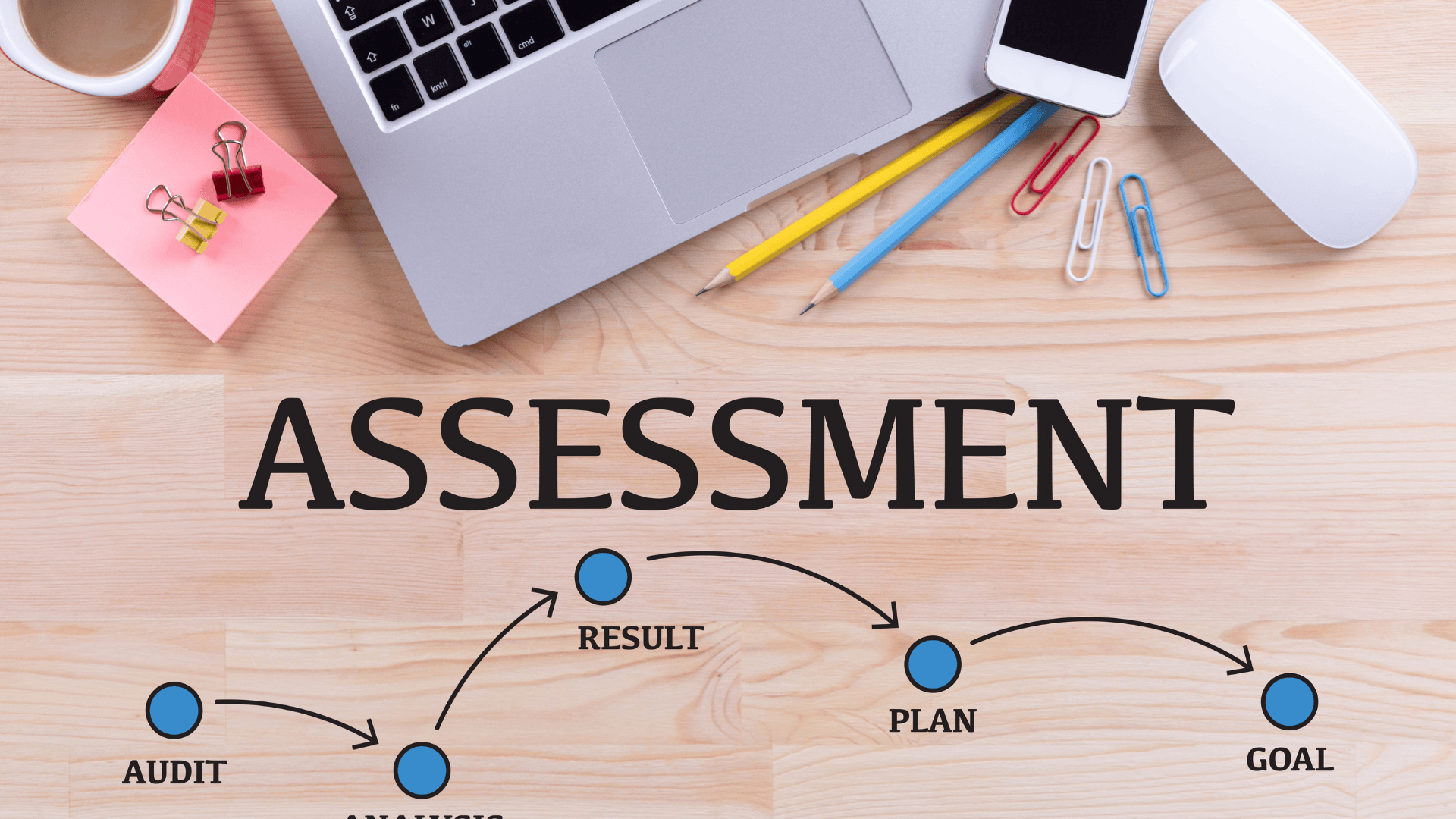
Your Personal Assessment: Where Do You Stand?
Understanding this leadership shift intellectually is one thing. Honestly assessing where you currently operate on the efficiency-to-advantage spectrum is another. Consider reflecting on these questions, not to judge yourself harshly, but to identify your natural starting point for development.
When you face a significant organizational challenge, what's your instinctive first response? Do you immediately begin analyzing the problem and formulating solutions, or do you start by exploring how your team is making sense of the situation? Neither is wrong, but the pattern reveals your default orientation. The efficiency mindset moves quickly to problem-solving and control. The human-advantage mindset creates space for collective intelligence and multiple perspectives.
How do you experience success as a leader? Does satisfaction come primarily from solving difficult problems and achieving concrete outcomes, or from witnessing your team members develop new capabilities and confidence? Again, both can be present, but which feels more fundamentally rewarding reveals what you're actually optimizing for.
When team members come to you with questions or challenges, what's your habitual response pattern? Do you feel most comfortable providing answers and direction, or creating conditions where they discover insights themselves? The efficiency mindset values quick resolution. The human-advantage mindset values learning and development, even when that takes more time initially.
In moments of organizational stress or pressure, where does your attention naturally go? Do you focus primarily on metrics, timelines, and deliverables, or on how people are processing the pressure and what support structures they need? The efficiency mindset manages through control and optimization. The human-advantage mindset leads through connection and capability.
How do you talk about your team members when they're not present? Do you primarily reference their performance, productivity, and outputs, or their unique capabilities, growth trajectories, and contributions to collective intelligence? Your private language often reveals your actual mental models more accurately than your public statements.
These questions aren't designed to make you feel inadequate if you recognize efficiency-focused patterns in your leadership. Most of us were trained, rewarded, and promoted specifically for those patterns. The point is simply to bring awareness to your current operating system so you can make conscious choices about evolution.
The Path Forward: Your Next Steps
Transforming your leadership approach doesn't happen through a single decision or dramatic announcement. It emerges through consistent, intentional practice of new behaviors that gradually reshape your neural pathways, your team's expectations, and your organization's culture.
Start with one relationship where you can practice the core shift: moving from managing for efficiency to leading for human advantage. Choose a team member you interact with regularly and make a conscious commitment to approach every conversation from a developmental mindset. Instead of asking “What's the status?” ask “What are you learning?” Instead of providing answers, ask questions that help them access their own thinking. Notice how the relationship shifts over time.
Pay attention to the questions you ask in meetings and decision-making contexts. Questions reveal and reinforce what you value. If your questions consistently focus on timelines, metrics, and resource allocation, you're signaling that efficiency is the primary concern. If your questions explore diverse perspectives, learning opportunities, and capability development, you're signaling that human advantage matters. Your questions literally shape what your team attends to and optimizes for.
Create space for reflection in your own leadership practice. The efficiency mindset values action and momentum, often at the expense of learning and integration. Schedule regular time for genuine reflection: What patterns am I noticing in my team's performance? Where is breakthrough thinking emerging, and what conditions allowed it? Where are people struggling, and what might they need that I'm not providing? What am I learning about leadership that challenges my previous assumptions?
Seek developmental relationships for yourself. The most powerful leadership transformation happens in relationship with others who can help you see your blind spots, challenge your assumptions, and support your growth. This might be through formal coaching, peer leadership circles, or mentoring relationships. The specific structure matters less than the commitment to your own ongoing development.
Perhaps most importantly, practice extending to yourself the same grace and developmental mindset you're learning to offer others. You will have moments where you default to old patterns, make decisions from an efficiency mindset, or miss opportunities to develop capabilities in others. These moments aren't failures-they're data points in your learning process. The question isn't whether you'll have setbacks, but whether you'll use them as opportunities for growth or evidence that transformation is impossible.
The Stakes: Why This Shift Matters Now
The leadership transformation from efficiency focus to human advantage isn't just a nice evolution for those interested in progressive management theory. It's becoming a fundamental requirement for organizational survival in an environment where artificial intelligence is rapidly automating analytical and optimization functions.
Organizations that continue optimizing for efficiency as their primary competitive advantage are essentially competing with technology at precisely the tasks technology does best. They're setting themselves up for a race they cannot win, where each efficiency gain is met with technological advances that make those gains irrelevant.
Meanwhile, organizations that successfully make this shift are building capabilities that compound over time and cannot be commoditized. Adaptive capacity, innovative culture, collective intelligence, and genuine resilience don't just create temporary advantages-they fundamentally change what's possible for the organization. These capabilities become more valuable as the environment becomes more uncertain and complex.
The window for making this transition is narrowing. As artificial intelligence capabilities expand, the gap between efficiency-focused and human-advantage organizations will widen dramatically. Organizations still optimizing traditional metrics while their competitors are building transformative human capabilities will find themselves increasingly irrelevant, wondering why their performance keeps declining despite doing everything “right” according to conventional wisdom.
But here's the opportunity: most organizations are still operating in the old paradigm. Leadership that genuinely understands and implements human-advantage principles doesn't just create incremental improvement-it fundamentally repositions the organization in its competitive landscape. The leaders who grasp this shift now, who do the difficult work of transforming their own leadership approach and developing these capabilities throughout their organizations, are building sustainable competitive advantages that will define industry leadership for decades.
This isn't about abandoning operational excellence or ignoring business fundamentals. It's about recognizing that in an AI-augmented world, operational excellence is table stakes rather than a differentiator. Your true competitive advantage lies in the distinctly human capabilities that artificial intelligence cannot replicate: the capacity to build trust, develop talent, foster genuine innovation, and create organizational cultures where breakthrough thinking emerges naturally.
The question isn't whether this leadership shift is necessary. The question is whether you'll make it proactively, positioning your organization for the future, or reactively, trying to catch up after competitors have already captured the advantage.
The transformation starts with a single choice: to see leadership not as a set of management techniques for optimizing performance, but as a practice of developing human capability and creating conditions where collective intelligence flourishes. Everything else flows from that fundamental shift in perspective.
What would become possible in your organization if every leader made that choice?