
Why the Best Decisions I Ever Made Came From My Gut, Not My Dashboard
There's a moment every leader knows-when the spreadsheet says one thing, but something deep inside whispers another. The data points left. Your instinct screams right. And in that split second, you have to choose which voice to trust.
I've sat in that uncomfortable space more times than I can count, watching colleagues nod approvingly at PowerPoint slides filled with metrics and models, all while my gut twisted with certainty that we were about to make a spectacular mistake. The pressure to defer to data in those moments is enormous. After all, we live in an age that worships at the altar of analytics, where admitting you made a decision based on intuition feels dangerously close to confessing you just guessed.
But here's what nobody talks about in those boardrooms: some of the most transformative decisions in my career-the ones that created breakthrough results, saved relationships, or completely redirected strategy-came from trusting that inexplicable knowing that arrived before my rational mind could catch up. And I'm not alone. When you scratch beneath the surface of seemingly data-driven success stories, you'll find leaders who ultimately trusted something more nuanced, more human, and far more powerful than any dashboard could reveal.
The Hidden Intelligence Your Body Already Possesses
Your gut feeling isn't mystical nonsense or wishful thinking masquerading as insight. It's the product of an extraordinarily sophisticated biological system that processes information in ways your conscious mind simply cannot match. While you're busy analyzing the top three data points in your quarterly report, your brain is simultaneously processing thousands of subtle environmental cues, historical patterns, emotional contexts, and experiential memories-all happening beneath the threshold of your awareness.
Think about the last time you walked into a meeting and immediately sensed tension, even though everyone was smiling and the agenda looked straightforward. You couldn't point to specific evidence in that first thirty seconds, yet you knew something was off. That's your neural pattern-recognition system at work, drawing on accumulated experience to deliver insights faster than conscious thought can articulate them. This isn't magic-it's millions of years of evolutionary development creating a decision-making advantage that no amount of artificial intelligence can replicate.
The enteric nervous system, often called the "second brain," houses millions of neurons lining your digestive tract. This isn't just responsible for processing your lunch-it's intimately connected to your decision-making processes. When you feel something "in your gut," you're experiencing a genuine physiological response as your body processes complex information through channels that bypass your conscious analytical mind. The sensation is real because the processing is real, even if you can't immediately explain the algorithm that produced it.
Why Experience Creates an Unfair Advantage Data Can't Match
Every interaction you've navigated, every crisis you've managed, every success you've celebrated, and failure you've survived has encoded itself into your neural architecture. Over time, these experiences create sophisticated mental models-internal frameworks that allow you to recognize patterns and predict outcomes with remarkable accuracy, often before you can consciously articulate why.
Picture a seasoned sailor reading the ocean. They're not consulting instruments every thirty seconds to determine if conditions are shifting. They're noticing the quality of the light on the water, the feel of the wind on their face, subtle changes in wave patterns-processing dozens of environmental variables simultaneously and arriving at conclusions that a novice with the same instruments couldn't reach. Their intuition isn't mystical-it's pattern recognition built through thousands of hours of direct experience.
The same principle applies in leadership. When you've spent years navigating organizational dynamics, reading people, managing crises, and making strategic calls, you develop an internal compass calibrated by lived experience. This compass can detect subtle misalignments between what someone says and what they mean, spot the early warning signs of projects heading off course, or recognize opportunities that don't yet show up in the data. This form of intuitive leadership decision-making becomes your competitive edge-the ability to see around corners before the numbers reveal what's coming.
The Analysis Paralysis Trap in the Age of Infinite Data
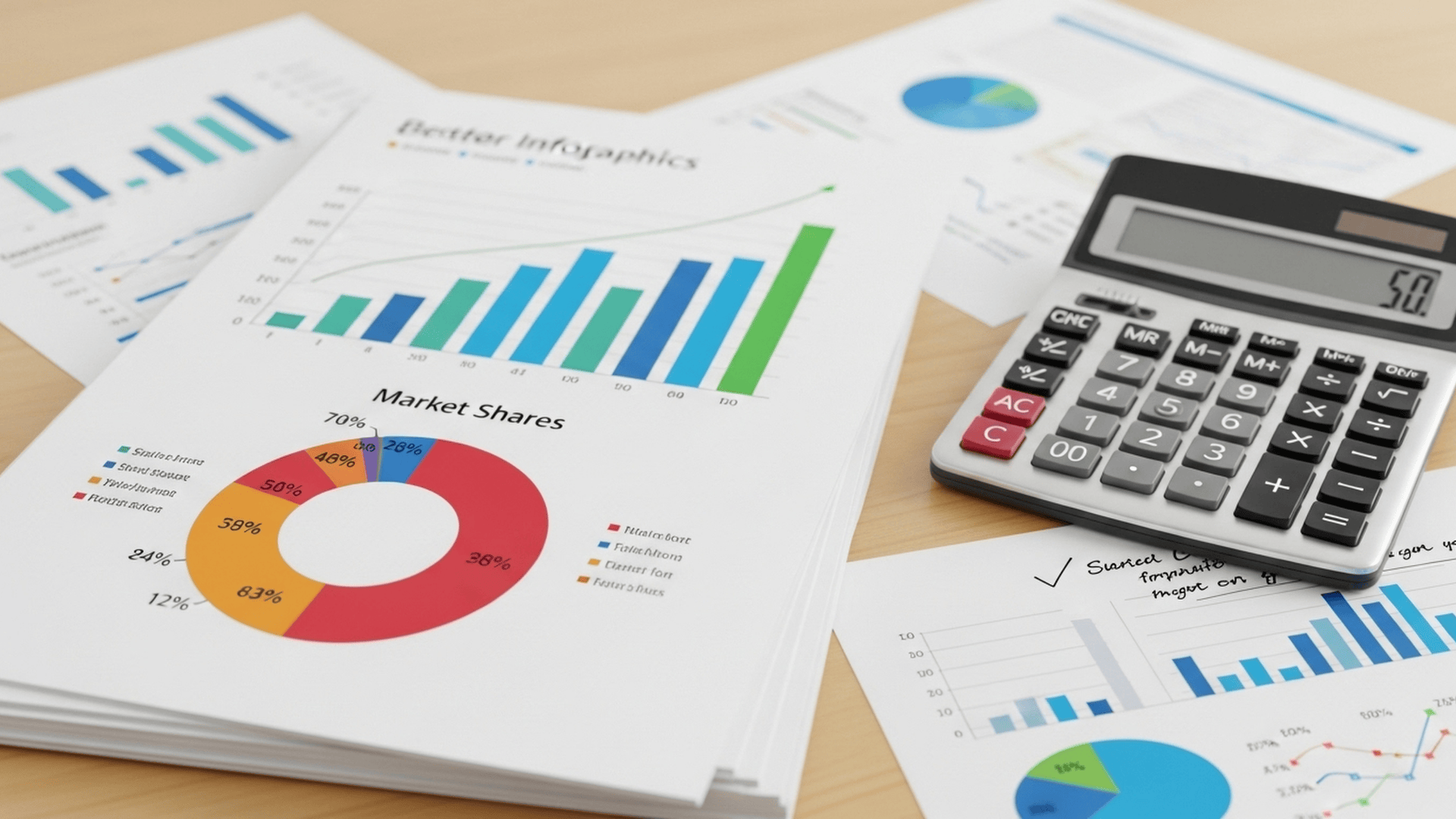
We've entered an era where you can measure almost anything. Website clicks, employee engagement scores, customer sentiment analysis, productivity metrics, market trends updated in real time-the volume of data available for any given decision has become overwhelming. And with it comes a dangerous illusion: if we just analyze enough variables, we'll find the “right” answer.
But here's the trap: more data doesn't necessarily lead to better decisions. It often leads to delayed decisions, overcomplicated strategies, and the paralysis that comes from trying to account for every possible variable before taking action. While you're waiting for one more report, commissioning another study, or running additional scenarios, the window of opportunity closes, competitors move faster, or the problem you're analyzing evolves into something entirely different.
Think about the leaders you most admire throughout history or in your own career. The decisions that defined their legacies weren't typically the result of having more data than everyone else. They were the result of having the courage to act on incomplete information, guided by a sense of conviction that transcended what the available metrics could prove. They understood that in complex human systems-which is what all organizations fundamentally are-perfect information is a myth, and waiting for it is often the riskiest decision of all.
The human judgment advantage lies in our ability to weigh not just quantifiable factors but intangible elements: organizational readiness, cultural fit, moral implications, long-term relationship costs, and the subtle emotional currents that will determine whether a technically sound strategy actually succeeds in practice. Your gut integrates all of this complexity into a signal that feels simple but is actually profound in its sophistication.
When Data Becomes a Security Blanket Rather Than a Tool
There's a particular type of leader who commissions endless research not to inform a decision but to justify one they've already made-or worse, to avoid making one altogether. The data becomes a shield against accountability, a way to say “the numbers told us to do this” rather than owning the inherent uncertainty that comes with any significant choice. This isn't data-driven leadership; it's decision avoidance dressed up in analytical clothing.
The most effective leaders I've encountered use data as input, not instruction. They understand that numbers can tell you what is happening but rarely why it's happening, and almost never what you should do about it. The “what” and “why” require human interpretation, context, and judgment-skills that come from experience, wisdom, and yes, intuition.
Distinguishing Intuition from Bias: The Critical Difference
Now, before anyone accuses me of advocating for purely emotional decision-making or dismissing data entirely, let me be clear: not every gut feeling is wisdom. Sometimes that voice in your head isn't intuition-it's unexamined bias, fear, ego, or wishful thinking wearing an intuition costume. Learning to distinguish between genuine intuitive insight and these impostors is one of the most critical skills a leader can develop.
Genuine intuition has specific qualities that set it apart from its counterfeits. It tends to arrive with a sense of calm certainty rather than anxious urgency. It remains consistent over time rather than fluctuating based on your mood or who you last spoke with. It often contradicts what you want to be true rather than conveniently aligning with your preferences. And it typically comes from a place of expanded awareness-considering multiple stakeholders and long-term consequences-rather than narrow self-interest.
Bias, by contrast, usually has an agenda. It wants to protect your ego, confirm what you already believe, avoid discomfort, or justify a predetermined outcome. It gets louder when questioned rather than remaining steady. It narrows your field of vision rather than expanding it. And it tends to dismiss contradictory information rather than integrating it into a more nuanced understanding.
Developing the capacity to distinguish between these voices requires practice and honest self-reflection. It means cultivating enough self-awareness to recognize when your ego is talking versus when your deeper wisdom is speaking. It means being willing to hold space for uncertainty rather than rushing to premature conclusions. And it means building the emotional intelligence to notice when fear or desire is coloring your perception.
Building a Framework for Trusting Your Internal Compass
So how do you develop this discernment? Start by tracking your intuitive hits and misses. When you have a strong gut feeling about something, note it before you know the outcome. Then review it afterward with honest objectivity. Over time, you'll start recognizing the specific quality of intuitive knowing that tends to be reliable versus the feelings that lead you astray. This isn't mystical-it's calibration through feedback, the same way you'd improve any other skill.
Create space between stimulus and response. When you're facing an important decision, resist the urge to either act immediately on your first impulse or to immediately override it with analysis. Sit with the question. Notice what arises when you're not forcing an answer. The most reliable intuitive insights often emerge in those quiet moments between active thinking-during a walk, in the shower, or in that twilight space between sleeping and waking.
Engage in practices that strengthen your connection to your internal wisdom. This might be meditation, journaling, time in nature, or simply creating regular pauses in your day for reflection rather than reaction. The neuroscience of intuition reveals that insights often surface when your brain is in a relaxed, diffuse mode rather than a tightly focused analytical state. Building in these breaks isn't wasting time-it's creating the conditions for your most sophisticated cognitive processes to operate.
Why Innovation Rarely Comes From Incremental Data Analysis
Consider for a moment how breakthrough innovations actually happen. They don't typically emerge from someone analyzing existing data more thoroughly than their competitors. They come from someone making an intuitive leap-seeing a possibility that doesn't yet exist in any measurable form, connecting dots that weren't obviously related, or trusting a vision that the current metrics don't support.
Data is fundamentally backward-looking. It tells you what has happened, what is currently happening in your market, with your customers, in your industry. And if your goal is optimization-doing what you're already doing slightly better-then data is your best friend. But if your goal is transformation, if you're trying to create something genuinely new, then at some point you have to step beyond what the data can tell you and into the territory of informed intuition.
Every significant strategic pivot, every market-creating innovation, every culture-shifting initiative begins with someone trusting a conviction that contradicts conventional wisdom or available evidence. They sense an emerging need before it shows up in consumer surveys. They see potential in an approach that hasn't been proven. They recognize that the path forward requires abandoning what's working adequately to pursue what could work extraordinarily-a leap that data will never recommend you take.
This is where the human element becomes not just valuable but essential. Machines excel at optimization within known parameters. They can process vast amounts of historical data to find incrementally better solutions to existing problems. But they cannot make the intuitive leaps that create entirely new categories, because those leaps require synthesizing experience, emotion, cultural context, and values in ways that transcend pure logic.
The AI Age Makes Human Judgment More Valuable, Not Less
Here's the paradox: as artificial intelligence becomes more sophisticated at analyzing data and making predictions based on historical patterns, the uniquely human capacity for intuitive judgment becomes more valuable, not less. AI can tell you what has worked before. It can identify correlations and predict outcomes based on existing data. But it cannot integrate the kind of contextual nuance, emotional intelligence, ethical consideration, and experiential wisdom that human intuition provides.
When AI tells you that strategy A has a seventy-three percent success rate based on historical data, it cannot account for the fact that your team is exhausted, that your key stakeholder is going through a difficult personal situation, that the cultural moment has shifted in ways that will make this approach tone-deaf, or that pursuing this path will violate values that matter more to you than the predicted outcome. These considerations don't fit neatly into algorithms, yet they're often the factors that determine real-world success or failure.
The future belongs to leaders who can hold both realities simultaneously: leveraging AI and data for what they do exceptionally well-processing vast amounts of information, identifying patterns, making predictions-while maintaining trust in their own intuitive capacity to integrate factors that cannot be quantified but matter enormously. This isn't choosing between data-driven decisions and intuitive leadership; it's developing the wisdom to know which approach the situation demands, or more often, how to synthesize both into decisions that are analytically informed and intuitively sound.
Executive Clarity in an Age of Information Overload
The challenge facing leaders today isn't a lack of information-it's an overwhelming abundance of it, much of it contradictory, all of it demanding attention. In this environment, the ability to cut through noise and access your own clarity becomes a rare and powerful capability. This is where the practice of refining intuitive judgment moves from nice-to-have to competitive necessity.
Developing this clarity isn't about retreating from data or dismissing analytical rigor. It's about cultivating the internal capacity to process complex information, hold multiple perspectives, and ultimately access a deeper knowing about the right path forward. It's about building the confidence to say, “I understand what the data suggests, and I also sense something the data isn't capturing, and I'm choosing to weight that intuitive knowing heavily in this decision.”
This kind of leadership clarity doesn't happen by accident. It's developed through intentional practice, through seeking guidance from those who've walked this path before, and through creating the conditions-both internally and externally-that allow your intuitive capacity to strengthen over time. It requires learning to distinguish the signal from the noise, your wisdom from your wounds, and your genuine insight from the voices of doubt or ego that masquerade as guidance.
Giving Yourself Permission to Trust What You Know
Perhaps the most radical act in today's data-obsessed business culture is giving yourself permission to trust your own judgment. To make a decision because it feels right, even when you can't fully articulate why. To override the recommendation of a sophisticated model because something in you recognizes what the model cannot see. To act with conviction based on accumulated wisdom rather than waiting for proof that may never come.
This isn't recklessness or arrogance-it's the opposite. It's the humility to recognize that you've been learning, growing, and developing sophisticated pattern-recognition capabilities through every experience you've had. It's the courage to trust that this learning matters, that your judgment has been earned through the years you've spent developing it. It's the wisdom to understand that in complex human systems, perfect information is impossible, and your intuitive capacity to navigate uncertainty is often your greatest asset.
The leaders who make the most impact aren't necessarily those with access to the best data. They're the ones who've developed the capacity to integrate data with intuition, analysis with wisdom, metrics with meaning. They've learned to listen to that quiet voice that speaks before conscious thought catches up, and they've given themselves permission to act on what they hear.
Developing Your Intuitive Edge
So where does this leave you? If you're recognizing that your relationship with intuition needs development, or if you've been overriding your gut in favor of data and sensing that something important is being lost in that trade-off, what's next?
Start by simply noticing. Pay attention to those moments when your intuition speaks-when you walk into a room and sense something's off, when you read a proposal that looks good on paper but feels wrong, when an opportunity excites you even though you can't rationally explain why. Don't immediately act on these feelings, but don't dismiss them either. Simply notice them and begin tracking whether they prove reliable over time.
Create practices that strengthen your intuitive capacity. This might mean building in regular reflection time where you're not consuming information but allowing insights to surface. It might mean working with someone skilled in helping leaders develop this dimension of decision-making. It might mean deliberately making smaller decisions based purely on intuition and learning from the results. Like any skill, intuitive judgment strengthens with intentional practice.
Most importantly, start viewing your intuition not as a weakness to be overcome or a last resort when data is unavailable, but as a sophisticated form of intelligence worthy of development and trust. In an age where artificial intelligence can process data faster and more comprehensively than any human, your intuitive capacity-your ability to synthesize experience, emotion, context, and values into split-second decisions-represents your irreplaceable advantage.
The best decisions you'll ever make won't come solely from your dashboard or purely from your gut-they'll come from your growing capacity to integrate both, to leverage data where it's strong while trusting your intuition where it's essential. But that integration requires first giving your intuitive capacity the attention, development, and respect it deserves. Because in the end, the numbers will tell you what is, but only your wisdom can tell you what could be. And it's in that space between what is and what could be that leadership actually happens.
Ready to Develop Your Intuitive Leadership Edge?
The journey from data-dependent to intuitively confident leadership doesn't happen alone. If you're ready to refine this uniquely human capability and learn to trust the sophisticated pattern-recognition system you've been building throughout your career, let's talk. Executive coaching provides the space and guidance to develop the discernment that turns gut feelings into reliable strategic advantage-the kind of judgment that no algorithm can replicate.