
What ICF Master Coaching Reveals About Sustainable Performance
The performance paradigm that built your success is quietly destroying it. Every morning, high-performing leaders wake up and execute the same formula: push harder, optimize faster, deliver more. Yet despite the relentless effort, something fundamental feels broken. The metrics keep climbing while the person behind them slowly disappears.
Here's the paradox that neuroscience has finally illuminated: sustainable high performance doesn't come from doing more. It comes from being differently. And that single insight changes everything about how we approach leadership development in an era where artificial intelligence handles the optimization while humans must learn to do something far more complex-architect themselves for lasting impact.
The Architecture of Human Performance
Most performance strategies treat leaders like machines that need better programming. Update the skills, install new frameworks, run the productivity protocols. But human beings don't work that way. We're not systems to be optimized. We're neural architectures that either compound capability over time or gradually collapse under unsustainable patterns.
Think about how buildings are designed. A structure's longevity doesn't come from pushing materials to their maximum stress point continuously. It comes from understanding load distribution, natural resilience points, and how forces move through the entire system. Human performance operates on identical principles. The question isn't how much weight you can carry. It's whether your internal architecture can distribute that weight in ways that strengthen rather than fracture the foundation.
This is where ICF Master Coaching reveals something most leadership development completely misses. Traditional coaching often focuses on results-hit the targets, close the gaps, achieve the outcomes. But Master-level coaching works at a different stratum entirely. It builds human architecture. And that architecture becomes a force multiplier that touches everything a leader does, long after the coaching engagement ends.
Why Self-Awareness Isn't What You Think It Is
The corporate world loves to talk about self-awareness as if it's something you achieve once and check off your development list. Attend a workshop, take an assessment, get some feedback-congratulations, you're now self-aware. Except neuroscience reveals that self-awareness isn't a destination. It's a living, dynamic capacity that either deepens through proper development or atrophies through neglect.
Here's what makes this crucial for sustainable performance: your brain literally cannot regulate what it cannot see. When leaders operate without deep self-awareness, they're essentially flying blind through their own neurobiology. They push through exhaustion signals. They override stress responses. They mistake adrenaline for energy and confuse anxiety for motivation. And their nervous system keeps score, even when their conscious mind refuses to acknowledge the cost.
ICF Master Coaching creates something different-a reflective capacity that allows leaders to see themselves with clarity in real-time. Not through judgment or criticism, but through precise observation of patterns, triggers, and automatic responses. This seeing is what neuroscientists call metacognition-the ability to observe your own thinking and responding as it happens. And it's this capacity that separentiates leaders who sustain performance from those who eventually burn out spectacularly.
When you're truly seen by someone trained at the Master level, something neurologically significant occurs. Your brain begins to recognize patterns it couldn't perceive on its own. Defense mechanisms that operated invisibly suddenly become visible. Limiting beliefs that shaped decisions unconsciously move into conscious awareness where they can finally be examined and reshaped. This isn't therapeutic insight for its own sake. It's the foundation that makes every other leadership capability sustainable.
The Neural Pathway Revolution
For decades, leadership development operated under a flawed assumption: that qualities like clarity, courage, and resilience were essentially fixed. You either had them or you didn't. Leaders with natural confidence were lucky. Those who struggled with decision paralysis or risk aversion were simply wired that way. Development could help around the edges, but fundamental change seemed unlikely.
Neuroscience has demolished this limiting belief entirely. Clarity, courage, and resilience aren't personality traits you're born with or without. They're trainable neural pathways that strengthen through specific types of engagement and practice. Your brain's architecture is far more plastic than anyone imagined, capable of building new pathways and strengthening existing ones well into advanced age. But here's the crucial insight: this neuroplasticity requires the right developmental environment to activate.
Picture how a muscle develops. You don't build strength by occasionally thinking about lifting weights. You need progressive resistance, proper form, strategic recovery, and someone who can see when you're compensating with the wrong muscle groups. Neural pathway development works remarkably similarly. You need the right challenges, presented at the right developmental edge, with someone trained to recognize when you're defaulting to old patterns versus genuinely building new capacity.
This is where Master-level coaching diverges dramatically from standard methodologies. Anyone can ask good questions. Anyone can hold leaders accountable to goals. But building neural pathways for sustained clarity, genuine courage, and authentic resilience requires developmental precision that comes from deep training and extensive practice. It requires understanding not just what needs to change, but how human beings actually build lasting capability at the neurological level.
The Difference Between Coaching for Results and Coaching the Person
Imagine two leaders facing the same challenge-a critical strategic decision with incomplete information and significant consequences. The first leader receives coaching focused on the decision itself: analyzing options, weighing risks, creating decision frameworks. The second leader receives coaching focused on their relationship with uncertainty: how they perceive risk, where their thinking becomes constrained under pressure, what historical patterns influence their current state.
Both might make similar decisions in that moment. But their trajectories diverge dramatically over time. The first leader solves that particular problem. The second leader develops decision-making architecture that elevates every future choice they encounter. One received help with what to do. The other leader developed capacity for how to be-a distinction that compounds exponentially across a leadership career.
Results-focused coaching serves a valuable purpose, particularly in crisis situations or time-sensitive scenarios. But it's fundamentally transactional. It treats each challenge as a discrete problem to solve rather than an opportunity to build underlying capability. The leader remains dependent on external input for each new situation instead of developing internal resources that transfer across contexts.
ICF Master Coaching operates from a different premise entirely. Every challenge a leader faces is simultaneously a real business problem and a developmental opportunity. The Master coach navigates both dimensions skillfully, helping achieve the immediate result while building the human architecture that makes future results more accessible. This dual focus is what creates sustainable performance rather than episodic achievement.
The shift sounds subtle but the implications are profound. When you coach the person rather than just the problem, you're investing in infrastructure rather than putting out fires. You're building capacity that becomes a competitive advantage precisely because it's not easily replicated. Anyone can copy a strategy or steal a framework. No one can duplicate the internal architecture another leader has developed through rigorous personal evolution.

Leadership as Force Multiplication
The most overlooked aspect of sustainable performance is its multiplicative nature. When a leader operates from depleted internal resources, they might still achieve impressive results through sheer force of will. But they cannot effectively develop others. They cannot create psychological safety. They cannot model the resilience they intellectually know their teams need. The performance becomes isolated rather than expansive.
Contrast this with leaders who've developed genuine human architecture through Master-level coaching. Their clarity becomes contagious. Their courage gives permission for others to take intelligent risks. Their resilience creates organizational steadiness that allows teams to navigate uncertainty without constant reassurance. The performance multiplies organically because it flows from genuine internal capacity rather than manufactured external behavior.
This force multiplication effect explains why companies invest in executive coaching for their senior leaders. They're not just improving individual performance. They're upgrading the organizational nervous system. When a C-suite executive develops deeper self-awareness, that reverberates through every meeting they lead, every strategic conversation they facilitate, every moment of pressure where their team looks to them for stability.
The mathematics here are compelling even without specific data. Consider the number of interactions a senior leader has in a single day. Each conversation influenced by greater clarity. Each decision informed by stronger neural pathways for courage. Each response to adversity demonstrating authentic resilience rather than performative toughness. Multiply those micro-improvements across hundreds of daily touchpoints, and you begin to understand why human architecture generates returns that far exceed traditional leadership development investments.
The AI Acceleration Factor
Artificial intelligence is rapidly assuming responsibility for the optimization game. Algorithms analyze data faster, identify patterns more comprehensively, and execute routine decisions more consistently than any human ever could. This technological shift makes human development more critical, not less-but it fundamentally changes what type of development matters.
The leaders who will thrive in an AI-augmented landscape aren't those who can optimize better than machines. They're leaders who can do what machines fundamentally cannot: navigate genuine complexity, hold paradox without needing immediate resolution, build trust through authentic presence, and create meaning in ambiguous environments. These aren't soft skills that complement technical capability. They're the core competitive advantage that remains exclusively human.
ICF Master Coaching prepares leaders for this reality by developing capabilities that artificial intelligence cannot replicate. Self-awareness requires consciousness. Courage demands genuine stake and consequence. Resilience emerges from navigating real adversity, not simulated scenarios. These human capacities become increasingly valuable precisely because they cannot be automated or outsourced.
This creates an interesting inflection point for leadership development. As AI handles more tactical execution, the premium shifts entirely to human architecture. The leaders who invest in developing their internal capacity now are positioning themselves for a landscape where that capacity determines who thrives and who struggles to keep pace.
What Sustainable Actually Means
The word sustainable appears constantly in corporate conversations, usually referring to practices that can continue indefinitely without depleting resources. But when applied to human performance, sustainability means something far more nuanced than simply avoiding burnout. It means building capacity that compounds rather than depletes over time.
Unsustainable performance operates like withdrawing from a bank account. Each achievement depletes reserves slightly. Recovery happens during evenings, weekends, vacations-borrowed time that allows the account to partially replenish before the next withdrawal cycle begins. Leaders operating this way might sustain impressive performance for years before the account finally runs dry. The collapse often appears sudden to outside observers, but it's actually the inevitable conclusion of a long depletion process.
Sustainable performance works differently. It operates like compound interest, where capability builds on capability over time. Each challenge navigated successfully strengthens neural pathways for the next challenge. Each moment of clarity practiced deepens the capacity for future clarity. Each courageous choice makes the next act of courage more accessible. The account doesn't just maintain balance-it grows.
This compounding effect explains why Master-level coaching creates results that extend far beyond the coaching engagement itself. The work isn't teaching leaders to perform specific actions under specific circumstances. It's building human architecture that generates capability across all circumstances. A leader who develops genuine resilience through proper coaching doesn't just handle the current crisis better. They approach every future challenge with neurological resources that weren't accessible before.
The Choice Point
Every leader eventually reaches a moment of recognition. The old performance model-the one built on pushing harder, optimizing faster, delivering more-stops working. Not dramatically. Not obviously. It just stops generating the same returns. The effort increases while the fulfillment decreases. The achievements continue but the meaning fades. Something fundamental needs to change, but the path forward isn't clear.
This recognition is actually a threshold. On one side lies incremental improvement-tweaking the existing system, adding new productivity tools, finding more efficient ways to execute the same basic approach. These adjustments provide temporary relief but rarely address the underlying architecture problem. On the other side lies genuine transformation-rebuilding your internal capacity from the foundation up, developing neural pathways that create sustainable performance rather than episodic achievement.
ICF Master Coaching guides leaders across that threshold. Not through motivational speeches or quick fixes, but through rigorous developmental work that rebuilds human architecture. The process isn't comfortable. Growth never is. But it's the difference between spending your career managing depletion and spending it cultivating capacity that compounds over time.
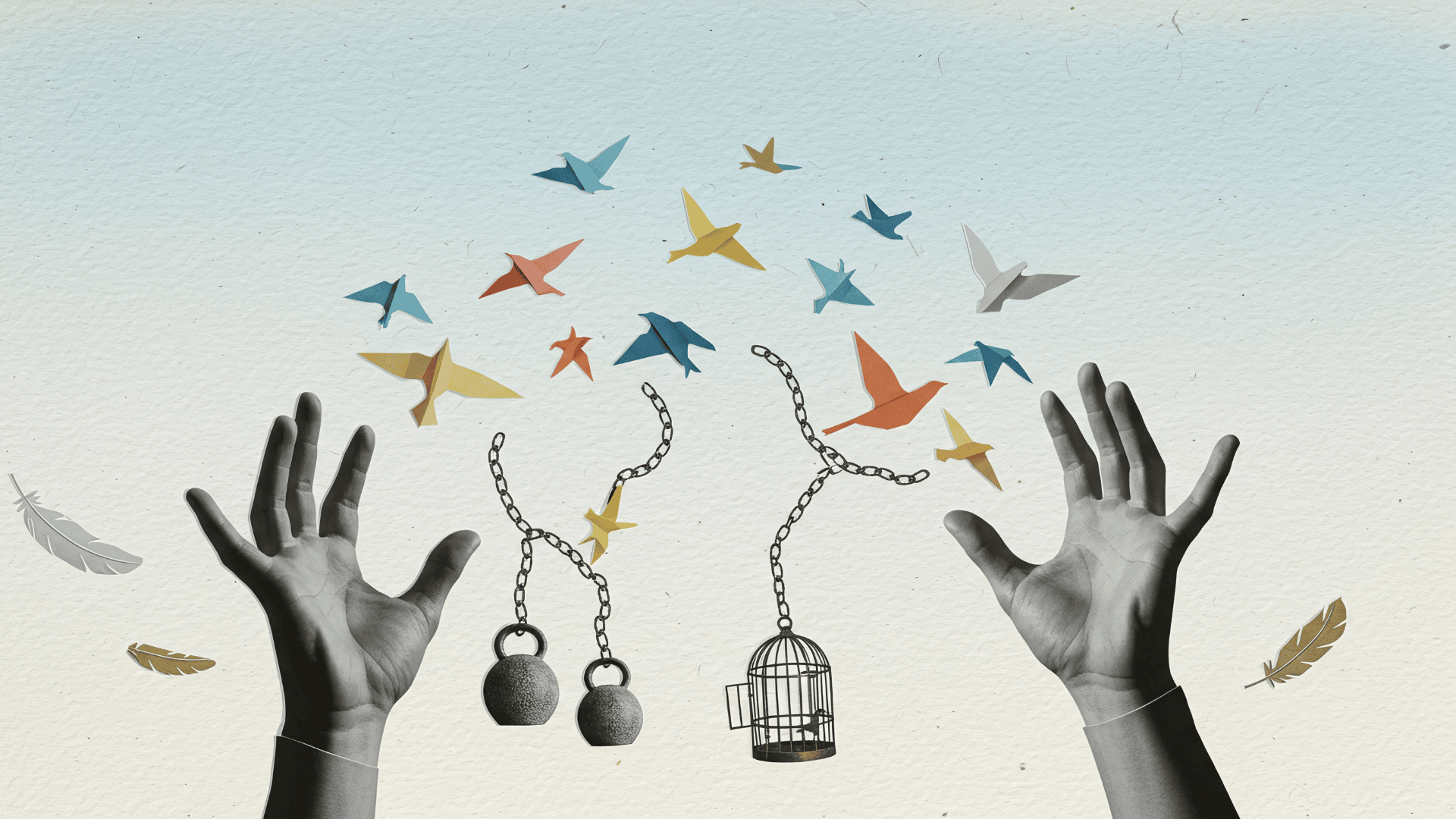
The choice isn't between working hard or taking it easy. It's between continuing to operate from an unsustainable performance model or investing in human architecture that makes sustainable high performance possible. Between treating yourself as a machine that needs better optimization or as a complex system capable of genuine evolution. Between solving today's problems or building capacity that elevates everything you'll encounter in the future.
What Becomes Possible
When leaders develop genuine human architecture through Master-level coaching, they describe the change in remarkably consistent ways. Not as dramatic personality transformation, but as fundamental shifts in how they relate to challenge, uncertainty, and their own capacity. Decisions that once generated anxiety become navigable. Conversations that used to drain energy become genuinely engaging. Challenges that previously felt overwhelming become interesting problems to solve.
This isn't positive thinking or manufactured confidence. It's what happens when neural pathways for clarity, courage, and resilience develop beyond superficial levels. The leader hasn't become someone different. They've become more fully themselves-operating from internal architecture that finally matches the complexity of their role and responsibilities.
The business outcomes follow naturally from this internal shift. Strategic thinking sharpens when clarity becomes your default state rather than an occasional achievement. Innovation accelerates when courage to experiment replaces risk aversion. Execution improves when resilience allows you to navigate setbacks without losing momentum. But these results emerge as byproducts of developed capacity rather than forced outcomes of increased effort.
Perhaps most significantly, sustainable performance becomes genuinely sustainable. Not because you've discovered the perfect work-life balance formula or implemented better productivity systems, but because your internal architecture now generates capability rather than consuming it. You're no longer withdrawing from reserves. You're building resources that compound over time.
The Path Forward
Understanding that sustainable performance comes from human architecture rather than optimization is valuable insight. Applying that understanding to your own development is where transformation begins. The question isn't whether you need to evolve your leadership capacity-the complexity and pace of modern business already answered that. The question is whether you'll approach that evolution through incremental adjustments or fundamental architectural development.
ICF Master Coaching represents the latter path. Not because Master coaches have secret techniques or proprietary frameworks, but because they've developed the capability to work at the architectural level of human performance. They've trained extensively in how people actually build lasting capacity. They've practiced the developmental precision required to strengthen neural pathways rather than just modify behavior. They bring expertise that elevates the entire coaching engagement from helpful to transformational.
This expertise matters more than ever in a landscape where tactical optimization belongs to artificial intelligence and sustainable human performance becomes the primary competitive advantage. The leaders who invest in building genuine human architecture now are positioning themselves for a future where that architecture determines who thrives and who struggles to keep pace.
Your current performance model brought you this far. The question is whether it can take you where you need to go next. Not just to the next promotion or the next quarterly goal, but to sustained high performance that compounds over years and decades rather than depleting the person achieving it. That journey requires more than incremental improvement. It requires rebuilding your human architecture from the foundation up.
The work isn't easy. Genuine development never is. But the alternative-continuing to push an unsustainable performance model until something breaks-extracts far greater cost. Every leader eventually chooses between these paths, whether consciously or by default. The only question is whether you'll make that choice deliberately, while you still have the energy and capacity to invest in building something sustainable.
Consider this your invitation to assess your current performance model honestly. Not whether you're achieving results-you wouldn't have read this far if you weren't successful. But whether your approach to performance is building capacity over time or slowly depleting reserves you may not realize are finite. Whether your internal architecture matches the complexity of what you're trying to accomplish. Whether what got you here has any chance of taking you where you need to go next.
Those questions deserve more than quick answers. They deserve genuine exploration with someone trained to guide that inquiry at the level of human architecture rather than surface behavior. They deserve the developmental precision that ICF Master Coaching brings to leadership evolution. They deserve your honest attention before the unsustainable becomes the unbearable.
Book a discovery conversation to explore your human architecture and what sustainable performance could look like for you. Not because you need fixing, but because the complexity ahead requires capacity you may not have fully developed yet. Because your success depends increasingly on who you're becoming, not just what you're achieving. Because sustainable performance isn't about doing more-it's about being differently, and that transformation begins with a single conversation.